No more trout in Trout Valley
The fish are gone. The people remain.
Bob got tired of tossing drunks on their ass.
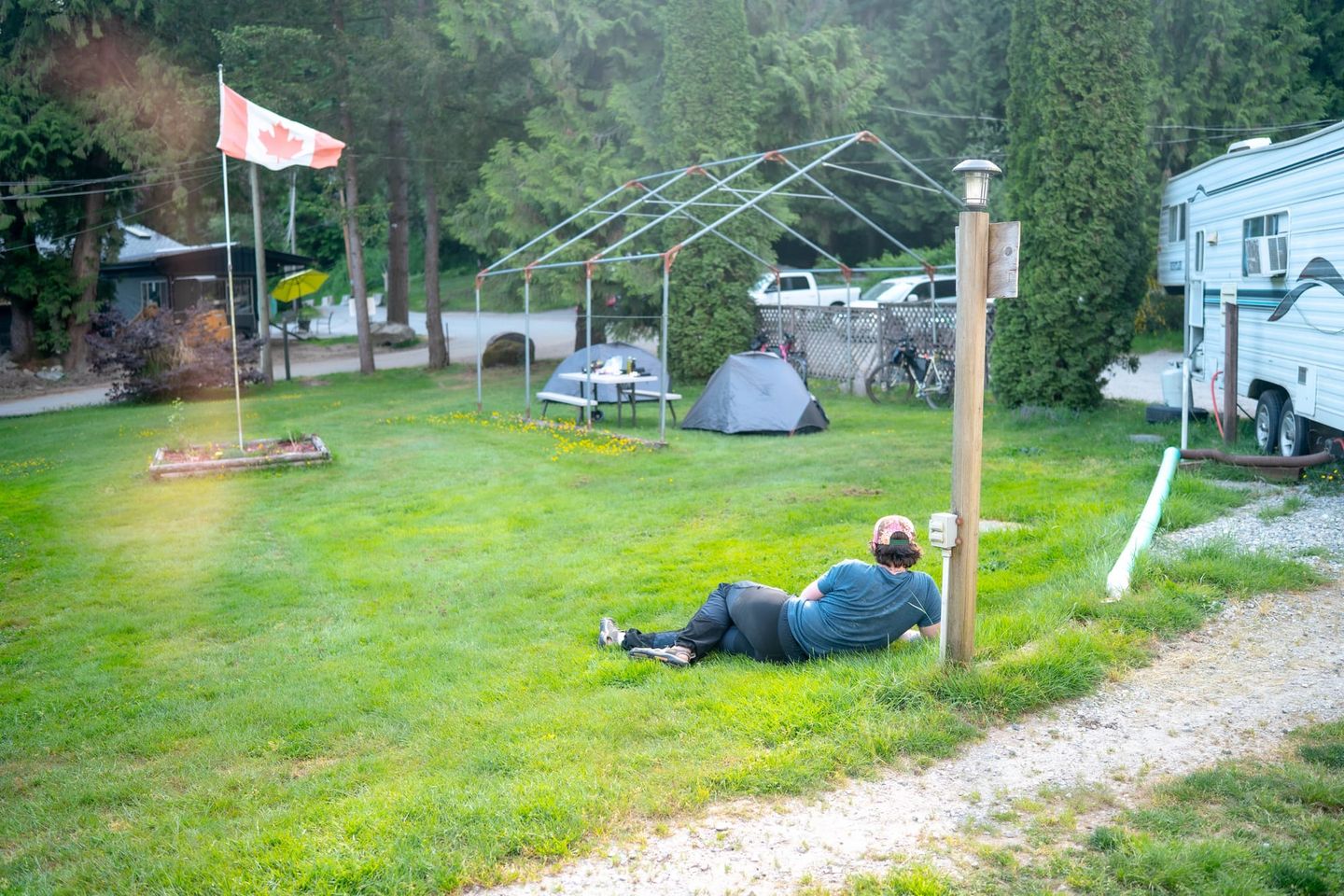
“They’d be up in your face screaming and suddenly they’re down in the dirt looking around like how’d I get here.” A large glot of cigarette ash landed on the short grass by the flag pole. Bob stomped it out with his brown sandal. Everything he wore was somewhere on the continuum from brown to beige. Pressed pants, coiffed hair, yellowing teeth. The only speckles of colour outside of this were red splotches of blood vessels at war with time and age that shone through his cellophane skin. Of the 75 years he had been alive, it seemed not all of them were easy. The last 30, spent living as caretaker of Trout Valley Campground, had been better than most.
He was telling me, just after we met, that sometimes you had to knock a drunk down a couple times before he got the message. It seemed he never had trouble doing it, but eventually decided he’d rather not have to do it at all. He said this to explain why Isaac and I were the only campers at the campground who were not permanent. It used to be a place full of transients. With the in and out shuffle of new tarps and tents every night, came the challenge of drunks and rabble rousers who didn’t know how to keep a good time to themselves.
Now every lot in the 30+ Acre property was full of RVs with wood decks and moss covered roofs. The road approaching was festooned with signs telling would-be-travelers that the campground was regrettably full.
Since Bob had moved into the camp in the late nineties he had watched it slowly settle into a quiet form of collective retirement. First the lots filled up with permanent campers, then they stopped stocking the lake.
Once the Trout Valley U-Fish had held thousands of trout. Bob stayed on hand daily, running the grounds and trying to catch would-be-thieves.
“They’d go down to the lake with their lunch in a cooler then at the end of the day when it was time to pay up for what they’d caught they’d only have five fish in their bucket, meanwhile there’s ten more stuffed under their empty beer cans in the ice box.”
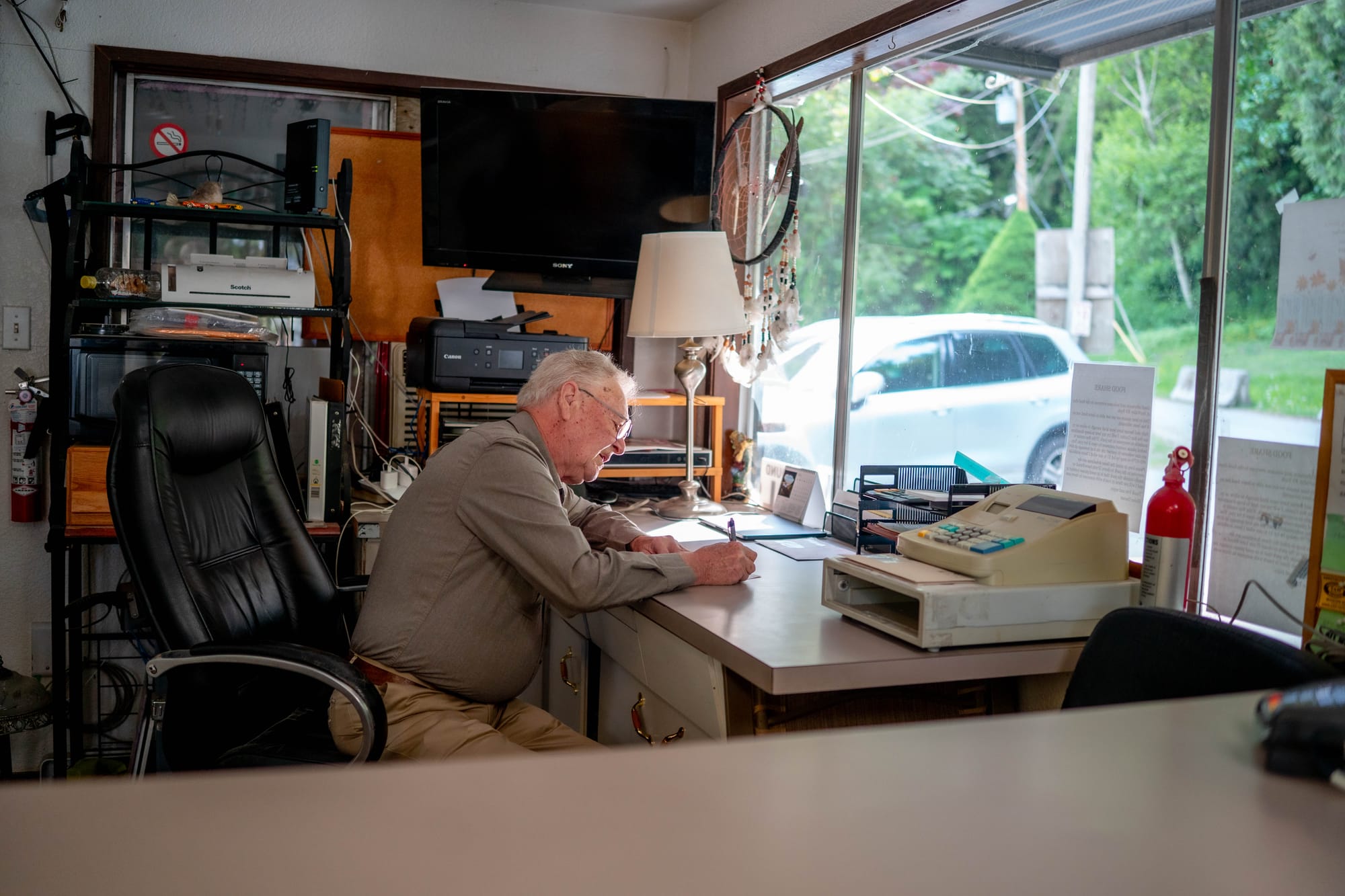
As he told us this story we moved from the small field in front of the rec room to the camp site's office where Bob would help us complete the paperwork to get registered for the night. The office was a small squat building festooned with the paraphernalia required for the soul of a campground to remain intact. Humorous signs, crafts, and aging photographs were nailed to the wall next to maps and dated information printed on plain paper. Dirty construction equipment for some nebulous project left incomplete was splayed across the floor. Several big bass fish were mounted on the wall, all of them without batteries, Bob assured us stoutly, when Isaac expressed an interest. As he pulled out the registration book he mused to himself,
“Been a long day. I had to work two whole hours.” He had the countenance of a stern man, but when it came to talking business, he did not once give a straight answer.
Every time I asked how much it cost to stay at the campground I received a different reply. When I called a few days out, after being directed to the campground by a forum of Cross-Canada Bike Packers, Bob told me after a long familiar hum and haw,
“Well it’ll be about 15,000 per person.”
I laughed. He didn’t.