Not built to last
We aren’t as far from colonization as we’d like to pretend
THIS ARTICLE IS FREE BECAUSE IT’S ISAAC’S FAVOURITE ARTICLE WE’VE MADE FOR THE PAPER TRAIL. ENJOY.
“Call this a wooden spoon?”
The old man’s voice sounded like gravel scattered over a tin roof.
“What’s wrong with the spoon?” A lower voice with less holes in it replied.
“I didn’t say anything wasn’t right with it.”
The other man considered this for a moment. I listened idly with my back turned.
“Nothing wrong with a plastic spoon but there’s sure nothing wrong with a wooden one.”
“Sure.”
A paper straw works just as well as a plastic one now.”
“It’s fake wood though.”
“The paper?”
“The spoon. A composite. Too thin, sorry excuse for wood and for a spoon.”
“It’s fine enough I don’t know what your problem is with it.”
“It’d melt if you put it in my Oma’s coffee.”
“A steel beam would melt in your Oma’s coffee. But at least it would last longer than the plastic spoon.”
Tin speakers crooned out the classic she was working as a waitress in a cocktail bar overhead and two old men coughed at each other, eating cheesecake and coffee. Each bite of cake brought to the lips by a small composite wood spoon. In the aging farmers meaty hands, it looked as though the paltry spoon could snap in half with only the slightest breeze.
Isaac and I sat at the next table, watching the rain pour outside, waiting for it to break.
“Did you get the machine to work?”
“Which machine?”
“The machine, I was down here two weeks ago and you said you were trying to fix the machine. How should I know which one it is.”
“Oh that one.” Then he paused. “No.”
Thin slices of cardboard basted lightly with cheese and red sauce oscillate under a flickering heat lamp in an enclosed glass case.
“John says he’s in Brandon now.”
“Who?”
The other man belches and does not reply. He does not seem to have heard.
A silence lapses over the pair, only to be broken by the long wheezing sips of coffee pulled from the edge of a paper cup.
The silence lasts a long time. Eventually one of them leans over to talk to Isaac and I instead, the obvious interlopers in these parts. But when the rain abates and we walk out the door I see through the window that the two affable old farmers have slipped back into their silence. They each drive over an hour every week to meet at the highway road stop, where they sip cheap coffee, complain about the spoons, then sit in silence.
Across this country old men are meeting in highway rest stops in groups of two to six, the same way they have been for years. The same questions are asked, the same stories are told, the same truth is revealed. My father used to joke “In Alberta, the information super-highway is four farmers leaning on a truck bed and talking about the weather.”
The truth isn’t that far off. In small population areas especially, those regular points of contact are crucial for maintaining a network of support and a sense of community. In the modern age the trading post that everyone gathers their wagons around to find out what’s been happening, looks a lot like an A&W. In Europe old men clasp their hands behind their back and watch the construction workers excavate the ancient roman ruin that was discovered while they were trying to put in a new water pipe. They carry plastic chairs to century old stone courtyards in the middle of the city, smoke cigarettes and chat. In Canada they sit in the A&W, sipping coffee, ignoring the fact the fast-food chain has recently released a smash burger, and it is not very good. It is easy to romanticise, in a shallow way, the flagstone features provided for the congenial elderly in Italy or Rome, but what can we learn from our own gathering places? What do our fast-food forums for culture indicate about the ever-elusive Canadian identity?
Canada is young. Town squares in those fabled European countries cost very little now because they were built by an entirely different regime that probably used a now completely defunct currency to pay for said square. Due to our size and membership in the leading country unions (UN, G7, NATO, NAFTA, Etc.) it is easy to place ourselves on the same level as them, and in some respects, we are, but in others we still have a long way to go.
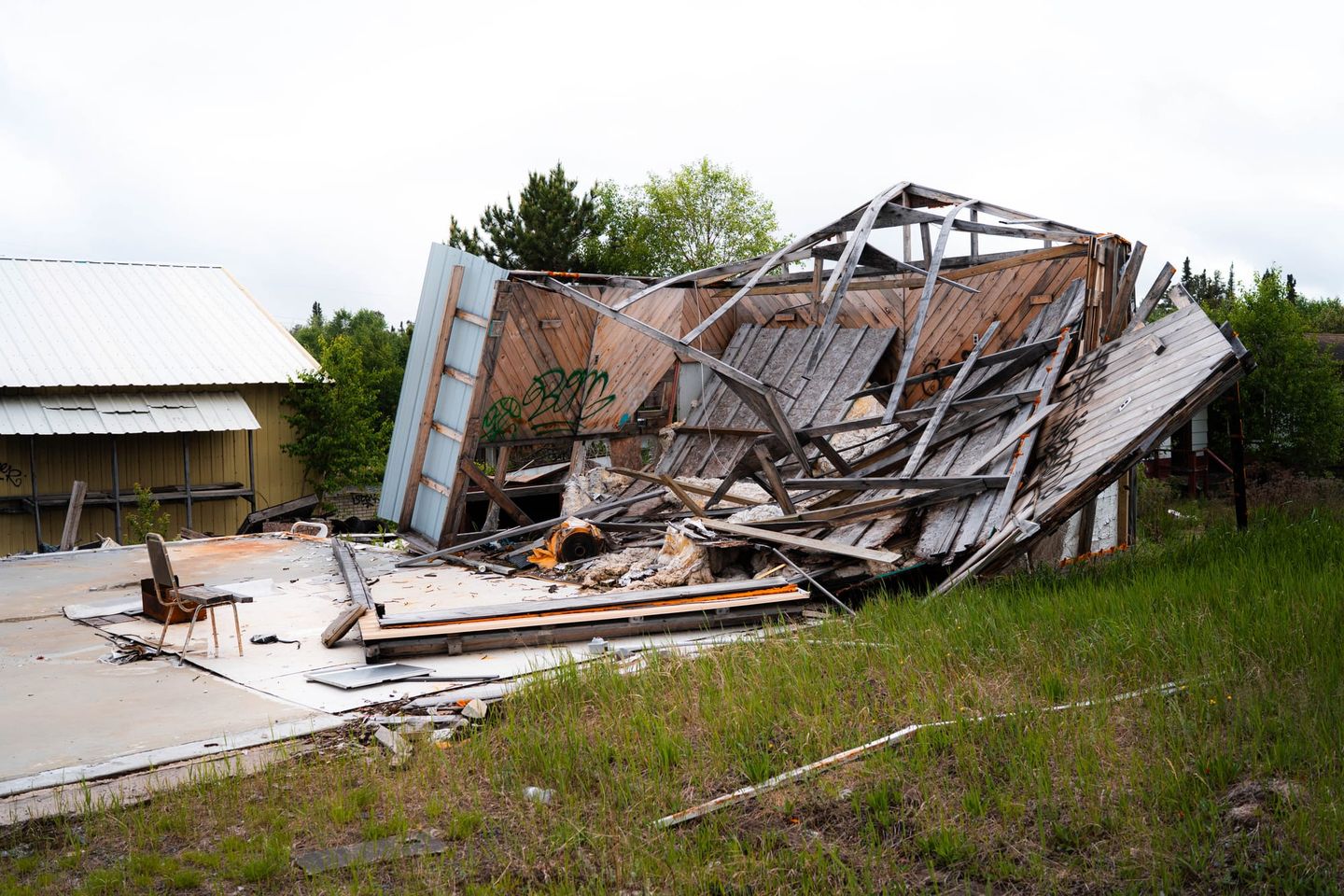
The First Nations people across this land were here from time immemorial, however it is hard to argue that Canada has built its culture in partnership with this reality. We are slowly, painfully, bit-by-bit, getting better at recognizing and integrating that history and teaching into our understanding of this land but I think it is fair to say that Canadian culture as it stands, was not built in hand in hand with the long standing culture that came before. So, in effect, Canada’s cultural infrastructure has very little to build off. In Saskatchewan, along the smaller town streets, the buildings look worn and ancient. The wood slat facades make me believe a gun slinger may step out at any moment. These buildings, the old west wooden structures, feel representative of Canadas youngest moments as a country. These historical buildings are all less than a hundred years old. There were older buildings before this, but they were built by settlers to last a few seasons, perhaps a generation or two, not several hundred years. Survival has been the most crucial aspect of our construction.
We are building our culture infrastructure from the ground up and we are trying to do it fast, so it makes perfect sense to me that our meeting places for the common man happen to be fast food chains. Items here are cheap, but profitable enough for the business. The seats are plastic, the walls are prefab, none of it will last more than fifty years. Our buildings are not made with an eye on longevity, but rather on cost and effectivity for the task at hand.
Canada is not as far from the sod house pioneers as we believe. They’ve just become a little shinier, with better insulated windows.


Join the conversation