Liberals reject transparency in election spending
Another blow to Canada’s democracy quietly being swept under the rug

A new Liberal bill would open the door for individual donors, who might not be Canadian, to pay millions in order to influence elections without any transparency. Through a glaring loophole that enables anonymous donors to “third parties” (a person or group that wants to participate in or influence elections other than as a political party,) individuals, even foreign actors, could legally influence elections.
The bill will allow “undemocratic and unethical spending, fundraising, donations, loans, and disinformation campaigns by wealthy Canadians, lobbyists and front groups funded by foreign governments, businesses and other organizations,” according to Democracy Watch, a watchdog for democratic institutions.
The Liberals wholesale rejected proposals to amend Bill C-25, which changes the Canada Elections Act. The bill removes requirements from the Liberals to publish fundraising events in advance, and allows them to keep money that was made at secret fundraising events that ignore the rules around holding these types of soirées.
NDP Don Davies tried to remove these clauses within the bill in order to protect the status quo, but it was rejected. We contacted his office about the bill, but did not receive a response in time for publication.
Meanwhile, Conservative MP, Michael Cooper, tried to implement an amendment in the act that would require “third parties” to report donor information, but this was also rejected.
"These amendments would have removed the exemption that allows third parties to use their own funds for regulated election activities if 10% or less of their revenue the previous year came from donations. Witnesses testified that this rule is easily subverted, allowing shell organizations funded entirely by foreign entities to spend millions influencing our elections,” Cooper said in a statement. He expressed disappointment in the Liberals for failing to close a loophole that will lead to foreign interference in Canadian elections.
Influencing party nominations
Third parties are able to spend unlimited amounts of money on nomination contests, and they don’t have to disclose who their donors are.
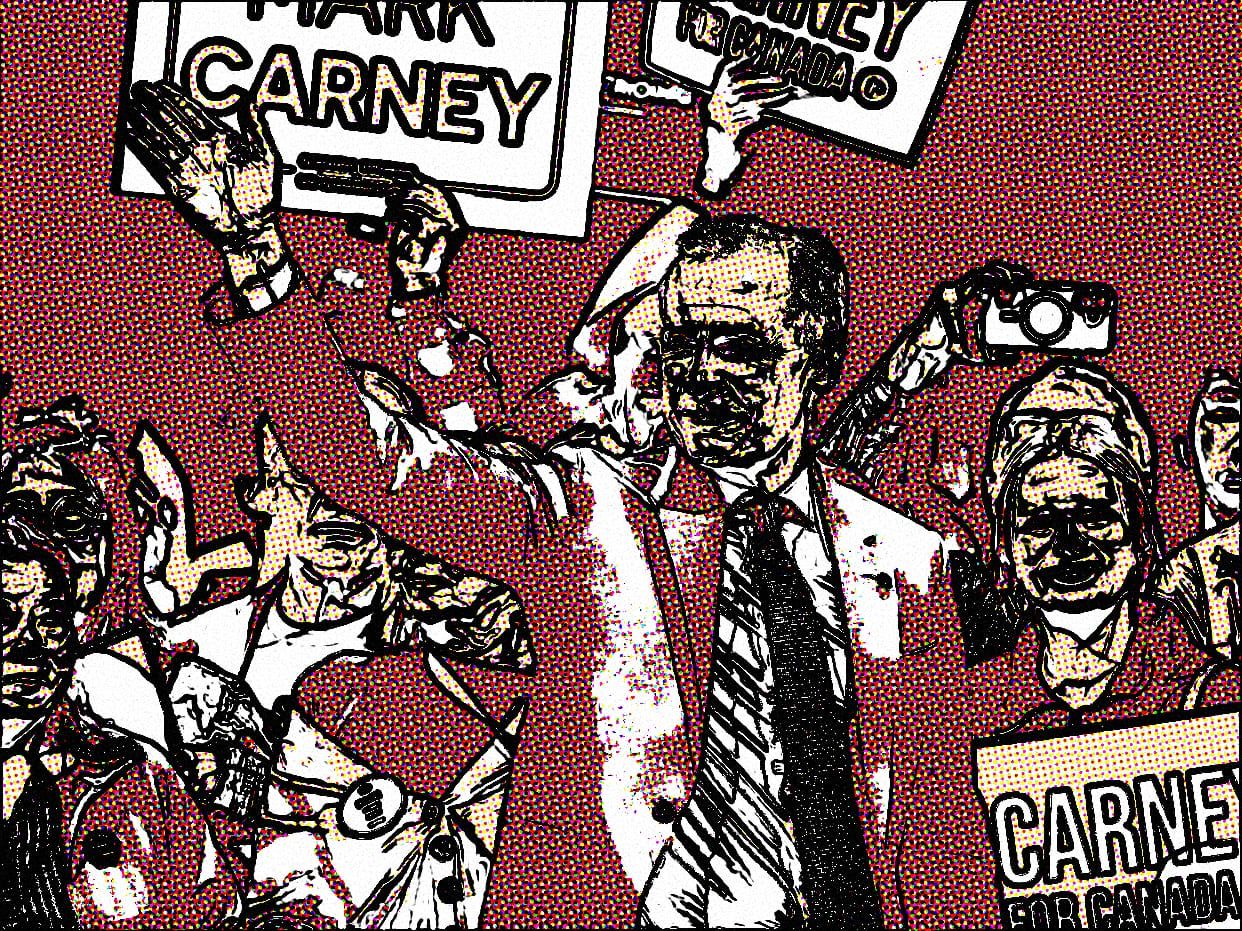
This occurred last year with Mark Carney. A substantial amount of money was spent pushing for Carney to become the leader of the Liberal party, but the third parties who donated for this to happen did not have to disclose who was backing this.
Carney became prime minister without being elected by the public through this nomination process.
No spending limits before elections, no transparency in cash flow
Canadian law also dictates limits on the amount of money that can be spent before an election by third parties, but this law only applies to fixed date elections— if a snap election occurs, there are no limits to third party spending beforehand.
Ironically, disclosure of donors for third parties is a law in the United States. To implement transparency laws around this would bring Canada up to date with basic laws that are already in place south of the border.
Duff Conacher, co founder of Democracy Watch said that third parties “can spend millions themselves, during a pre election period, and during the election period, (they can spend) more than $600,000. They don't have to disclose whether it's their money or whether they got it from a foreign government or a foreign business or some other foreign entity.”
If a foreign entity was to donate to these third parties, interfering in Canada’s electoral process, they can hide it behind a third party since they are not required to disclose who donated. “It is illegal to use foreign money— but you don't disclose who donated it. So how does elections Canada, or the Commissioner of Canada Elections ever know? It's legal for you to just say it's our own funds as a third-party interest group, or as an individual voter,” Conacher said.
Little to address misinformation
Further problems have been highlighted in the bill. The bill ignores obvious problems with misinformation. Bill C-25 bans deepfakes, but remains highly targeted in its understanding of misinformation. For the areas where it identifies misinformation as illegal, it also institutes a requirement that the misinformation has to be created with the intent of influencing election results or disrupting the election, a requirement that is more or less impossible to prove, as attested to by the Chief Electoral Officer in 2018.
The bill has been presented as a solution to prevent the “longest ballot” initiative. The longest ballot initiative is a protest movement to protest the first past the post system that leads to wildly skewed electoral results that favour the Liberals almost exclusively. It was used several times throughout 2025 and 2026, most notably in Pierre Poilievre’s riding in Battle River-Crowfoot.
Carney has led the Liberal government to implement backsliding on environmental issues that have been called “worse than Stephen Harper”, it has removed the advertising rules implemented under Trudeau, and Carney is under fire for silencing his caucus members by yelling at them and crushing dissent. The party has rapidly moved to the right, and could accurately be portrayed as a conservative government with Liberal red.
Last week, Steven Guilbeault, a well known environmental activist and minister under Trudeau, left the party because of this rapid shift to the right— especially around the environment. Conacher believes that this might happen again with other left leaning Liberals who are dissatisfied with the Carney approach to politics. Despite Conacher’s beliefs, there have been no indications that left wing Liberals in the government are doing much to push back against Carney. Conacher thinks they might be waiting until after CUSMA negotiations to avoid accusations of being anti-Canadian.
Carney has massive support in opinion polling, and seems poised to continue his popularity in the short term, although history has taught us how rapidly support in opinion polling can collapse. This government has shown itself to be extremely concerned with business interests, and lobbyists have been rabidly talking to Carney’s Liberals. Carney is actively looking to sell off large amounts of Canadian publicly owned assets, and supporting carbon intensive projects that are destructive to the planet. It seems that we have entered another era of mass privatization, which will likely lead to cost increases for Canadians during a recession.
Recently an ethics commission released a landmark recommendation to secure ethics in Canada, and increase democratic accountability. Carney has displayed a remarkable tendency to be autocratic, and this is another step in that direction.


Join the conversation