The court case that will determine the future of policing in Canada
45 protesters arrested for conducting a sit-in are facing the courts after two long years. The outcome of the case will determine how police will deal with activists and demonstrators in the future.

*Update to piece – the arrested got in contact with us with corrections of details throughout the piece. It has been updated to correctly identify specific timelines, and details around the event of the arrest.
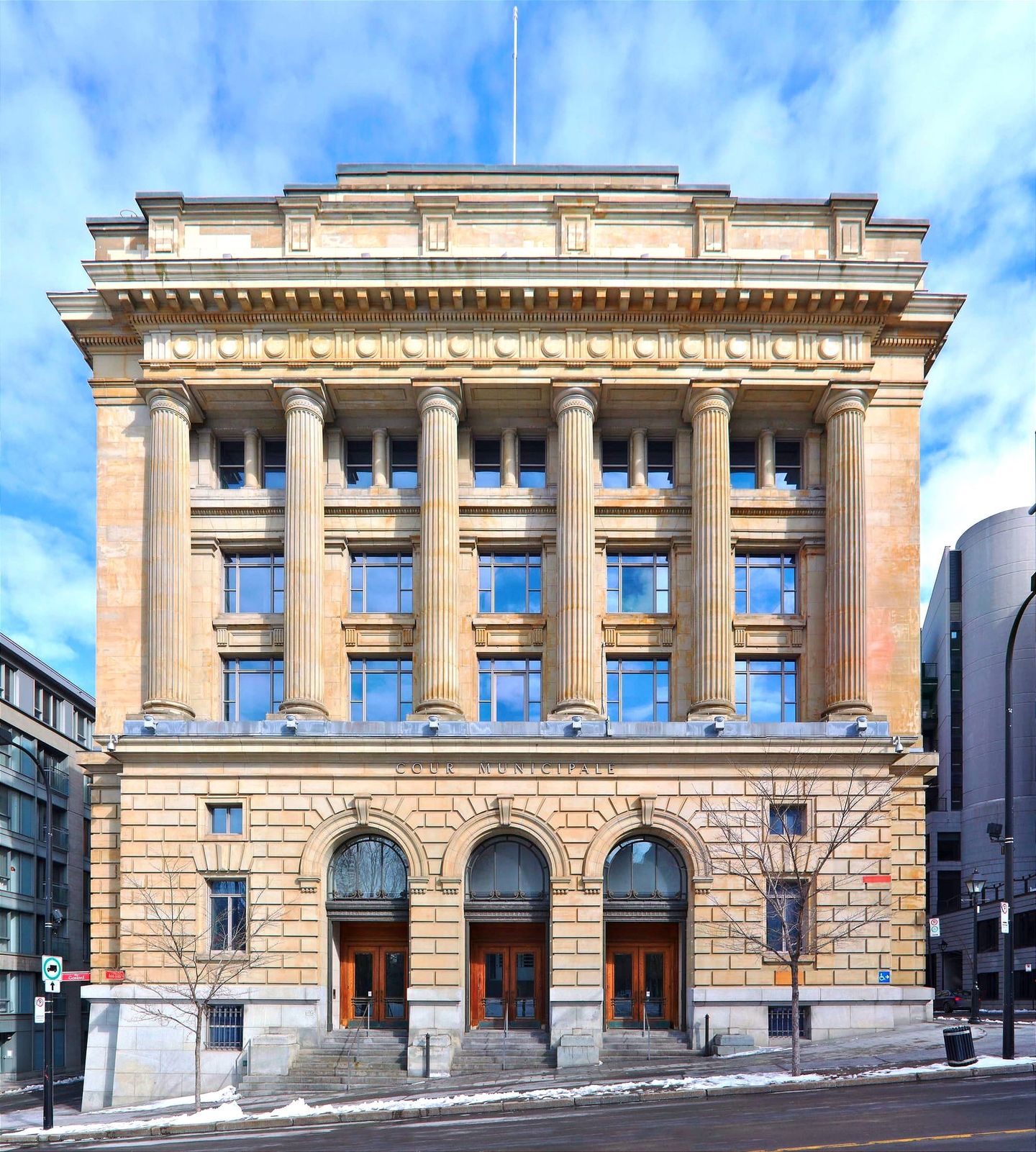
Officer Genevieve Roy was being cross examined. This was her third day standing in front of the court, answering similar questions to the previous days. Today, tensions were at an all time high. Barbara Bedont, the senior lawyer for the defense, was questioning her on why 45 demonstrators who had been arrested were not given water or access to a bathroom. Aleksandra Seweryn, junior lawyer for the defense, sat behind her.
In 2024, Roy had taken a course on how to deal with demonstrators, and yet she seemed unable to remember a single part of her training. Her response to nearly every question: “I don’t remember.”
As Bedont questioned the officer, the judge stopped her and told her she was covering subjects that had already been discussed. The judge felt that the questions were a waste of time, and were not efficiently covering the subject.
“I’m not trying to waste the court’s time, I’m trying to do my job,” Bedont said. The two stared each other down. The judge asserted her power as the one presiding over the case.
“I’m controlling the court room. I’m the judge,” she said.
Bedont, emotional, turned around with tears in her eyes and had to breathe. In a dramatic moment, she leaned over the benches, and remained there for sixty seconds or so.
No one moved. Everyone held their breath. In the back of the courtroom, the security guard’s stomach kept rumbling, a squishing sound that filled the ears of anyone close to him.
Suddenly, the silence was broken as Bedont walked out of the court room, and the exasperated judge called for a five minute recess.
Sit-in at Scotia
Two years ago, on April 15, 2024, 45 people were arrested for performing a sit-in at a Scotiabank in Montreal. Scotiabank was a target because they were the largest foreign investor in Elbit Systems at the time– Elbit is an Israeli weapons manufacturer. This February, Scotiabank divested all of their funds from Elbit.
“These pressure tactics have been effective, but two years later we’re still in court for this,” TJ, one of the people arrested, said. “It’s part of our civic duty to resist our country’s complicity in genocide.”
After their arrest, the protestors spent eight months gathering evidence and preparing a case against the city and the SPVM. They say that their charter rights were violated. During the hours of their detention ~10:00am until ~3:30pm, none of the protesters were allowed to use the washroom, eat, or drink water.
It has been two years, and the hearings have only just begun. What began as three weeks of court dates has turned into four– this is essentially unprecedented in a municipal court, especially considering that the charge laid against the protesters was mischief.
“There’s murder trials that only get two days,” Bedont, Senior Lawyer at Defend the Movement Quebec said. She’s representing the 45 who were arrested. “The issues are very complicated. So even if the charge seems not serious, the consequences for society are.” She explained that this could have rippling effects on the rest of the country and around policing, therefore this is being taken seriously by the courts.
This case follows the largest mass arrest that has taken place in Quebec since the Maple Spring of 2012, where hundreds of thousands of students protested against a massive school price hike by the then-Liberal government of Jean Charest.
On April 15th, 2024, there were dozens of actions taking place around the city as protests against the violence which had, at that time, recently broken out against Palestinians by Israel. The actions across the city were a completely decentralized, and uncoordinated movement– although these groups purposefully did their demonstrations on the same day.
The 45 walked in, sat down, and begun singing and chanting. They sat down peacefully. Suddenly, a security guard locked the door under the orders of the bank manager, trapping all forty five people within the building. 3 protesters, who’ve asked for their names to stay off the record, described a feeling of anxiety. They were trapped inside. Not a single person who worked at the bank had spoken to them, or asked them to leave.
Scotiabank employees started to escort people out of the building, as though something dangerous was going on. No entrance was blocked by the protestors, and all of them were sitting on the floor, posing no physical threat. They sat in front of the tellers’ desks.
After the clients had all been escorted out of the building, the employees continued working at their desks. One protester, who asked to remain anonymous, said that none of them seemed concerned. People drank their coffee, and joked with their colleagues in the cubicles next to them.
TJ explained that the group would have left if asked to do so. Soon after, the police showed up, and formed a line inside, completely barring the chance to exit the building when the door was unlocked. Soon, they started arresting people.
“The cops show up and we're like, okay, we're gonna continue our protest because that's what we're here for,” Eli, a protester who was arrested said. “The cops kept the doors locked. Then they were lining us and we're like, shit, okay. These massive cop men were standing over me (while I was sitting on the floor). It was pretty intense.” The line of cops was equipped with riot gear sans riot shield.
TJ, a registered medic, was afraid that they would be charged for possessing a weapon because they had scissors in their medical kit. They told the police that they had scissors in their bag, fearing that the police would think it was a weapon.
Efficient Arrest
The police set up a temporary base of operations using the cubicles in the Scotiabank, saying that they needed to be efficient in processing all of these people.
In total, between the mass arrest at 11:48am and the final person being released at 3:35pm, more than three hours had passed. During this, the police were saying that they had to be efficient.
“We were immediately unlawfully detained, later kettled, and faced a lot of harassment, which our lawyers are basically using as examples of our discrimination,” Harar, one of the protesters, said.
The police even started commenting on there being “a lot of women” who were part of the protest.
“When you're detained you have certain rights under the charter,” Bedont said. “Those rights weren't given to them. They weren't even read to them.”
“If you are detained, you have the right to be told why you're being detained and have your rights read promptly. But your detention also has to be legal. If it's not legal, it's arbitrary,” Seweryn said. “We're saying their detention was arbitrary.” Seweryn said that there were not reasonable grounds for detention, and that they weren’t being detained for detention, but for administration.
She noted, however, that although their detention was illegal, they were still being detained, and thus should have had their rights read to them. About half of the protestors were arrested by officer Genevieve Roy, the other half by the people under her orders.
Officer Roy, in court, was pressed about refusing bathroom access and water, as well as failing to read the detained their rights. She said that she wasn’t personally asked for these things, and neither was she aware of it. Roy said that had she been made aware of the problem, she would have allowed people to use the washroom, and have water.
The crown is alleging that the protesters were obstructing the use of the bank as a place of business, thus charging them with mischief. The defense spent ample time questioning this, but also believes that because the group’s charter rights were violated, the whole case should be thrown out.
The defense is arguing that this was a politically motivated arrest because the arrested were pro-Palestinian protesters.
“99% of demonstrators that (the SPVM) arrest are pro-Palestinian,” Bedont said. They obtained this information through a motion the lawyers brought to force the police to make the information available.
Protesters allege that the officers had no respect for their basic human dignity. “At this point where we are now detained and arrested and are going to be going through processing, we're still being told we can't use the bathroom,” Harar said. “At one point police officers tell us that if you volunteer to be processed first, you can go to the bathroom. They never actually let us.”
The crown has claimed that the protesters didn’t ask to use the bathroom, but Harar said that they asked early on in the arrest.
The police explicitly refused their request, and continued refusing throughout the two hours that Harar was detained.
“They had a rotation– so there was lunch break for them and so a whole group of them left to go have lunch and a whole other group showed up,” Eli said. “They were like ‘we want to keep our officers fresh.’” The police used the washroom.
During these arrests, Savanna Craig– then working with CUTV, now working at APTN, was arrested as well. She showed the police her press card as they entered the building, but they ignored it and arrested her anyway. The charges against her were dropped soon thereafter.
Bureaucracy meant to demoralize
A few hours after the dramatic confrontation in the courtroom, emotions had calmed down and the two lawyers sat eating lunch. The intense confrontation in the court was not a daily occurrence, but was built up over years.
“There’s a lot of frustration with the system. It does seem that there’s some favouritism happening towards the police and the crown,” Eli said.
This is the second judge that they’ve had. The previous judge stepped down after numerous conflicts with the defense. Eli said that the first judge yelled at the lawyers frequently, and mistreated them. The court did not elaborate on why he stepped down. Some protesters said that the new judge seems unfair towards Bedont and Seweryn. Bedont sees it as a cultural clash.
“I think that the judges here are the product of a different culture than the one that I come from,” she said. She’s from English Canada.
The protesters have sacrificed two years of their lives in this case, but Bedont and her Law Group, Defend the Movement Quebec, have given them an incredible deal and are helping them raise funds through crowdfunding.
Despite these struggles, the lawyers are confident in the case. The mistreatment of the protesters during processing was recorded from every possible angle, as Scotiabank records their premises 100 per cent of the time. They used the many angles that were available to them through the bank.
“The crown is scared,” TJ said. They explained that some of the witnesses the crown had called seemed to support the defense’s case. The lawyers agree.
“Certain admissions from the police officers are favourable for our case," Seweryn said.
Bedont laughed and agreed. “The prosecutor seems to be doing our job for us,” she said.
“Other people who aren't even involved in the case should feel outraged that this much of the people's time is being wasted,” Felix, another protester, said. “It was a moral action that we have the responsibility to take– we have the responsibility to protest these institutional instances of complicity in genocide and instead (of focusing on the real problem,) public money is being wasted dragging us through this court case.”
“There's all this talk of efficiency, efficiency, efficiency, yet we're being dragged through the mud in this long, run out two year process,” Harar said. “It's really hard to keep up morale, but one thing that has been helping is the community showing up.
“The bureaucracy is meant to sort of demoralize you. But we're not demoralized. We're still here. We're still committed to showing up and to fighting because this is important. It's important for people to protest. It's important for people to conduct sit-ins. It's important for people to remain outraged and remain consistent. And so we're drained, but we're here to continue fighting.”
The court is adjourned until May 11th.


Join the conversation