Ontario is Canada's Soul
It's 1/3 of the country's width, and more than 1/3 of the population. Let's talk about this behemoth of a province.

Good morning everyone!
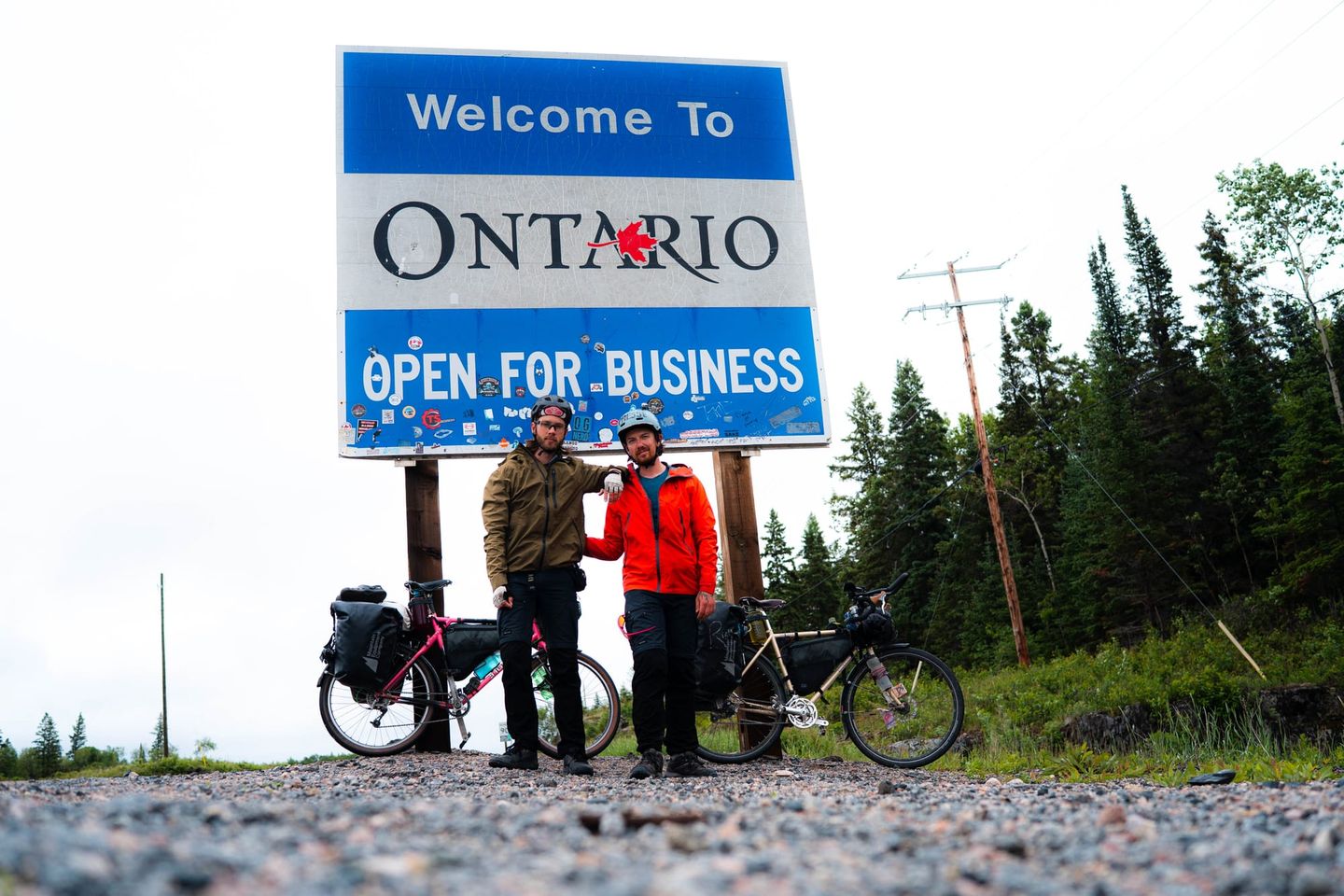
Although the trip is over, there are some more articles from the trip we wanted to release. We spent 64 days on the road seeing the country, and we talked to a thousand different people across Canada, listening to their stories and learning all that we could about the country. This was an ambitious and experimental undertaking that hasn't been done in Canadian journalism, and we have a few more weeks of articles to share with you all before we call it quits. We hope you've enjoyed this weird little thing that we've done, and we also hope you enjoy the next few weeks of work that we put into this.
___
Throwing their weight around
Western Ontario was long, a never ending slog of mountainous terrain with twisting roads on a highway with no shoulder whatsoever. As we trekked through the pine trees, we found ourselves bored with the slog that seemed as though it was never to end. One third of the total km2 of Canada's east to west is Ontario, and we were experiencing it first hand.
Five years ago we drove the needle strewn wasteland of this endless void in our van, and even then we remarked upon how brutally large the province is.
Once you get to Ontario, you never leave. It looms large over the country in every way.
Ontario's size is understandable as a metaphor for itself-- an endless power, the center of the country, and if you're from Toronto, probably the center of the universe.
Don't deny it, my beloved Torontonians, we all know that's how you feel!
Ontario is more than just one third of the east-west distance of Canada, it's also 39 percent of Canada's population. Thus, all of the political parties have one job: win Ontario.
*editors note - these graphs are interactive and much better on browser.
Out west, there is something known as "western alienation." This is the feeling that the western provinces have less importance than the eastern ones. The truth isn't so simple. Ontario has power because of population, but the argument that Ontario has too much power falls apart under a mild amount of scrutiny.
It is true that if a government can win lots of seats in Ontario and Quebec, they've won the entire House of Commons. Thus, since the 1960s, it has been the main strategy of the Liberals to win as many urban voters as possible in eastern Canada. This has provided a bedrock of Liberal dominance for the entirety of Canada's recent history. That being said, pre-Pierre Trudeau, the Liberals could win seats in the west.