Newfoundland’s failing carrying capacity
Two populations locked in a deadly spiral
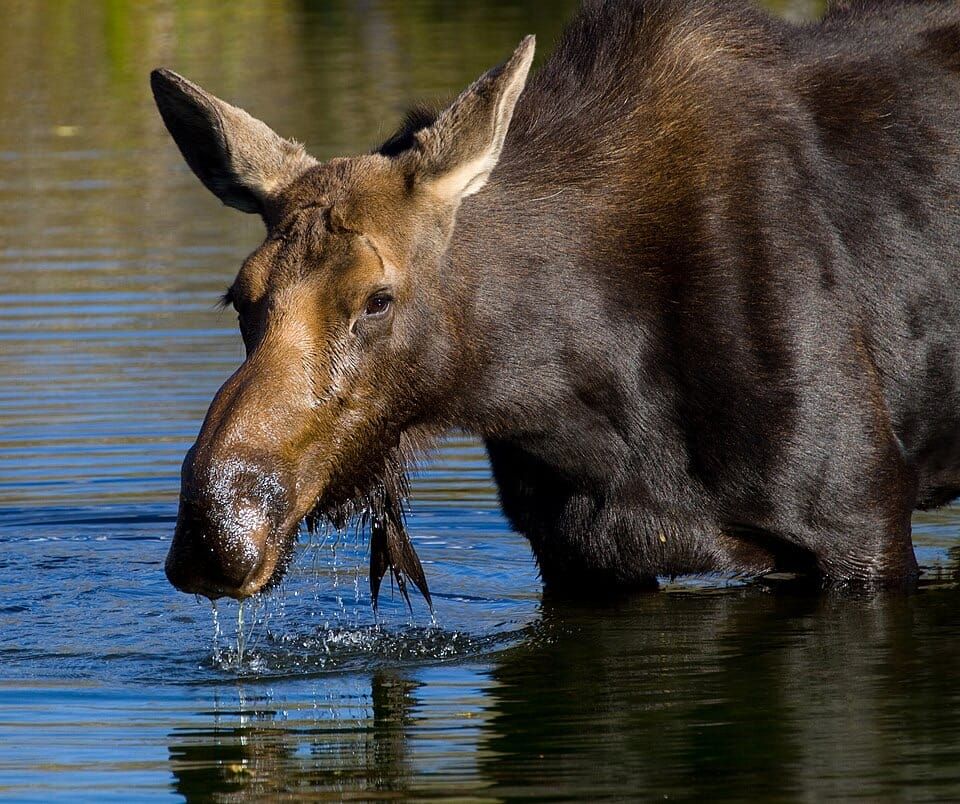
Two invasive species have taken up root in Newfoundland in recent centuries: Moose and Man. Both are walking a tightrope of challenges on the small Island province trying doggedly to not slip into a habitat-population cycle of decline.
One brought the other; in 1904, four moose were introduced to Newfoundland in Howley. The trapper hired to do the deed had lassoed seven of them in New Brunswick, tied them up, drug them on sleighs to the railroad heading for Newfoundland where he was promised $50 per moose. Three perished enroute, but the four who made it to land were released and are now the primary contributor to an estimated population of 110,000 (as of 2022)
The reasoning for the introduction of this invasive species is framed differently depending on who you ask. The folk lore claim is that it was to feed the people. Our host in Newfoundland said as much when I asked her about it. As Caribou populations declined rapidly to near extinction due to over-sport hunting, a need for a new food source that would not compete with the Caribous survival was clear, so the moose were brought in.
This claim of a governments earnest desire to feed its people seems noble enough, but reports now stored in Newfoundland’s Heritage site place the motivations as significantly more financially focused. The hunt to near extinction of Newfoundland’s Caribou had earned it a reputation as a “Sportsman’s paradise”, and with the development of the railway, industrialists were eager to expand their harvest of the Islands natural resources into the raw and untamed portions of the land. They hoped that by turning those wild reaches into a hunter’s playground they would attract foreign investors rife with cash to the area. They’d bag a moose, enjoy drinks at a hunting lodge, and have the chance to see the land for what it was: a jewel ripe for the plunder.
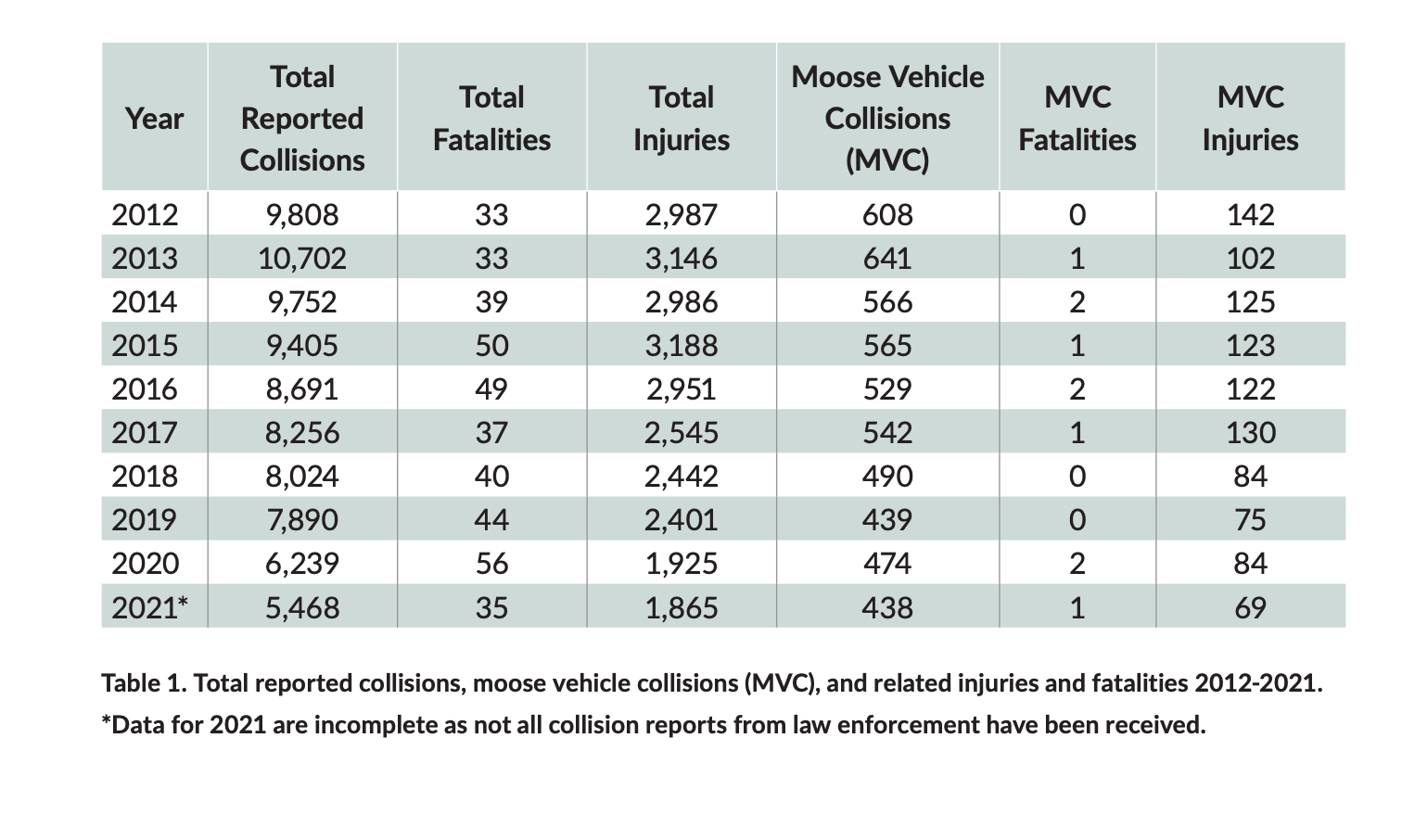
Now over a century later, it seems the moose have succeeded where the industrialists failed. Due to the already dwindling wolf population, which then went extinct around 1930, the moose flourished with no natural predators. This year 28,705 tags will be given out to hunters from across the province and beyond. This number is 1,090 higher than last year, and 28,625 higher than the first hunt in 1935. Since that first big spree the population of Moose has been growing drastically towards a breaking point, pushing the ecology of Newfoundland’s natural environments to its limits. Even as the government claims to have stabilised moose populations in recent years there are clear problems that have yet to be solved. “Moose vehicle collisions have occurred at a rate of 422 to 641 per year over the past decade.” A report by the government says.
The undergrowth in national and provincial parks are routinely picked clean by the megafauna foragers, making it impossible for new trees to grow as they are plucked summarily from the ground by the invaders. “Studies have provided conclusive scientific evidence indicating that moose grazing has had a profoundly negative effect on the regeneration of balsam fir and hardwoods after they have been harvested by the lumber industry.” This over harvesting of the land by a too-abundant population leads to a death spiral.
The population of moose increases until it strips the land of all it can provide, at which point the regenerative possibilities of the Island are truncated sharply., and without the huge swaths of plant life necessary to support the population, the moose go into sharp decline. Further confounding this cycle, hunting tags are often reduced when a moose population is shown to decline in an area. This only leads to moose continuing to proliferate just enough to ravage whatever plant life is left, further exacerbating the problem.
“In sum, there does not appear to be a stable equilibrium between the moose population and forest resources available to moose on the island.”
Hunting Newfoundland and Labrador does not see it that way. In promotional material the government sponsored site, designed to draw in those same sport hunters they hoped for in 1904, claims “The introduction of moose to the island of Newfoundland has been exceedingly successful from the perspective of moose and hunters”
Apparently the moose and the people killing the moose are both quite happy about the situation. Meanwhile in Terra Nova National park they have created huge fences with the hope of blocking out moose so that the trees can be allowed to survive, and people might see what the Island looked like before their arrival.
A moose eats roughly 20kg of vegetation daily. Which means that Newfoundland’s population of 110,000 moose are consuming two million and two hundred thousand kilograms of plant life across the province every single day. Direct links from the Newfoundland hunting page lead to websites boasting outfitter packages to bag a moose priced in USD, with some starting at $13,900. The motto of one outfitter: “It’s all about you.”
They pride themselves on attention to detail and a willingness to uphold Newfoundland’s age-old identity as the sportsman’s paradise.
For locals as well, over the past century, moose have become an integral part of assuring food security. Since 2020, moose meat has been allowed to be donated to the island’s foodbanks, and families that win the yearly moose tag raffle usual share their harvest with others, and in return have harvests shared with them in years they are not so lucky.
The need to hunt for food remains as jobs and industry continues to dwindle. The human population of Newfoundland is in a capacity-environment death spiral of its own. The dream of the 1904 industrialists was not realized, the moose hunters did not bring with them endless factories and financial investments to the island. As of Apil 1st, 2026 Newfoundland and Labradors population stood at 547,910, which represents a decrease of 647 people from January of the same year. Even though net migration has increased in recent years, it has not been able to overcome the losses in the natural population. Put simply, more people are dying than are being born. This is a problem across Canada; our entire countries population went down 55,025 people in that same period. As migration stances have changed, financial times have tightened, and our population has continued to age we face a dwindling country. Nowhere is this more felt than in the rural sections of the island of Newfoundland. In 1992 a cod-moratorium to address the depleted stock from over-fishing pushed 30,000 people into unemployment. This began a nearly continuous decade of population decline. “Out-migration occurred on a larger scale than ever before, the birth rate dropped, and the number of immigrants coming into the province did not offset the number of those leaving.”
Hardest hit were the rural communities, as immigrants tended to land in the more bustling city centers, and only rarely ventured out to the small dwindling villages which were already crippled by shrinking fishing industry. From 1991 to 2001 the rural settlements experienced a loss of 48,000 people. 18 percent of the population disappeared. The majority of this out-migration was young adults and young families, a reality which further crippled these villages abilities to bounce back. As no one was left to start new business, families, and futures, the towns dwindled and faced the threat of extinction. This started a death spiral of its own, as a dying town is none too appealing a prospect for a new provincial immigrant, and so the towns are left to their own devices. Similarly, there are huge rifts in the social fabric as families are separated constantly by the youngers need to move abroad for opportunities of work, education, and even access to healthcare or other important infrastructures. Many of the young in Newfoundland grow up with the knowledge that if they are to succeed beyond their means, it will mean they must leave their home.
As the youth continue to out-migrate, the overall age of the province continues to rise. With Canadian fertility rates below the replacement rate (meaning more people are dying than being born) for the past 50 consecutive years, it is unlikely that Newfoundland’s spiral may be righted. The only hope is a continued influx of immigrants to stymie the populations permanent bleed-out, but as Canada cuts permanent resident targets from 500,000 to 380,000 in 2026, it seems the moose may be in more luck than the man.

Join the conversation