

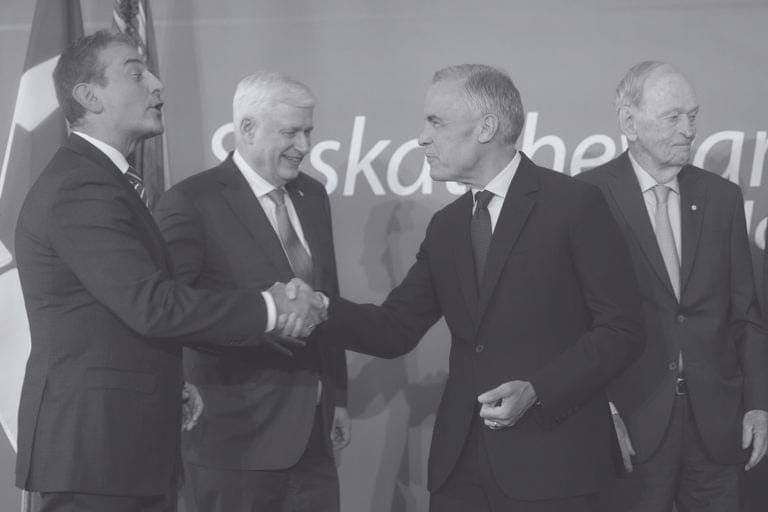
While many Canadians are struggling to pay rent and buy groceries, the Liberals hosted a mega summit to sell off public lands and create infrastructure projects that will, in their minds, supercharge the Canadian economy. The wealthiest people on the planet came to Toronto to listen to sales pitches and proposals to offload Canada’s public land to private interests.
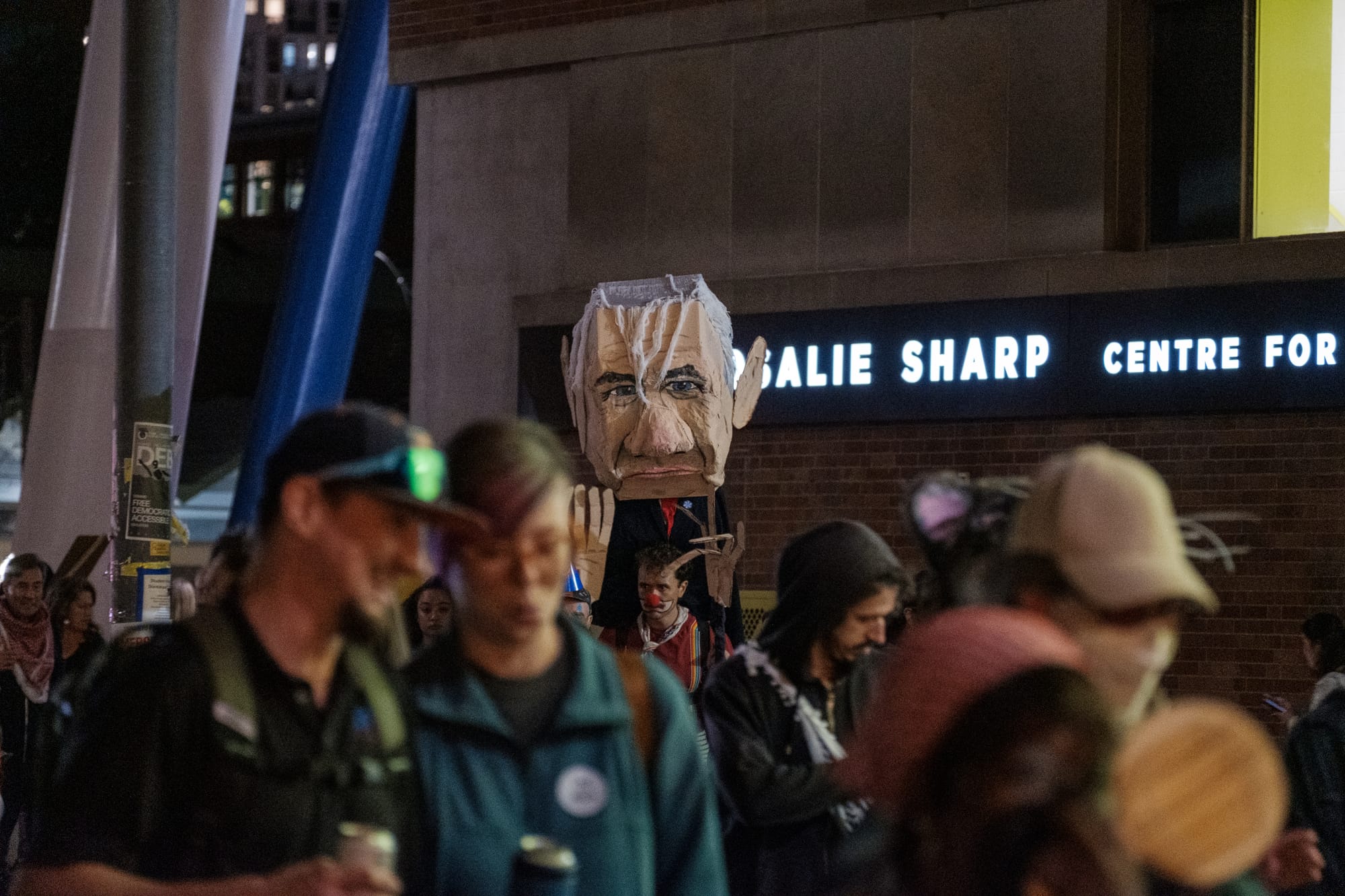
In Nathan Philips Square, 2000 people gathered with signs and righteous anger. “Invest in our future, not climate collapse,” “Oil is arson” and many other signs populated the crowd. Wet’suwet’en Hereditary Chief Na Moks spoke of the need to stand in solidarity to protect Canada’s territory.
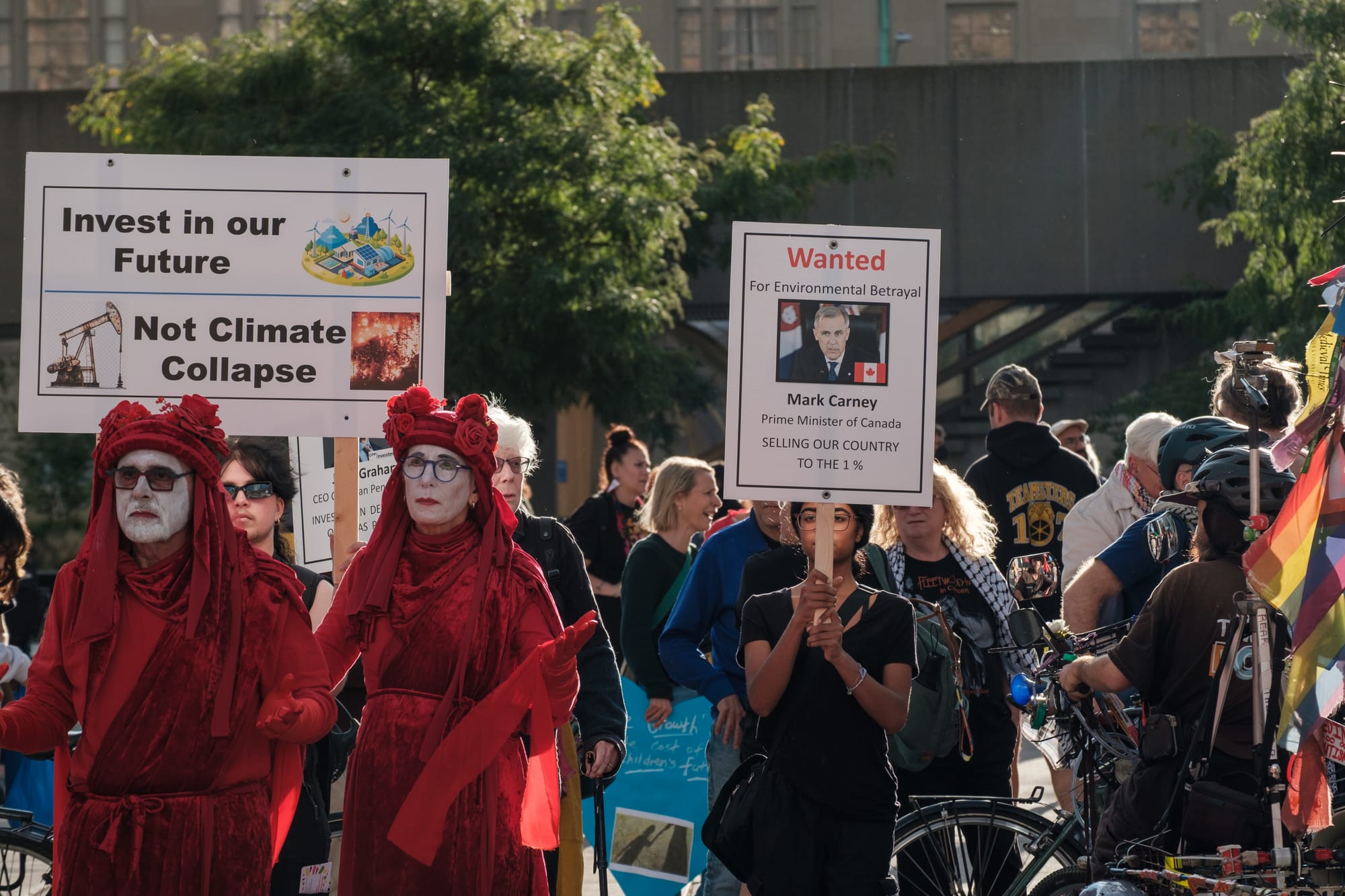
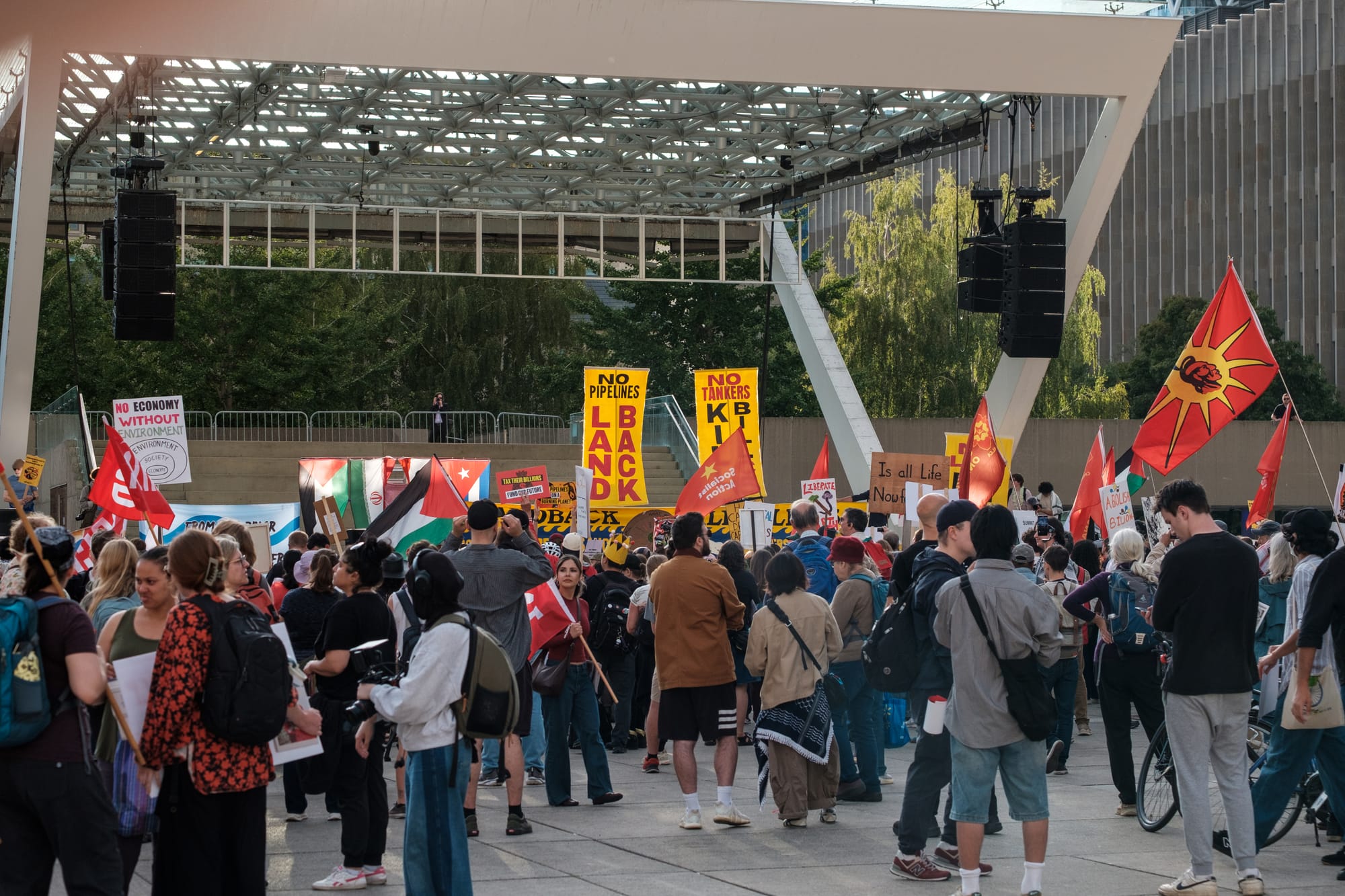
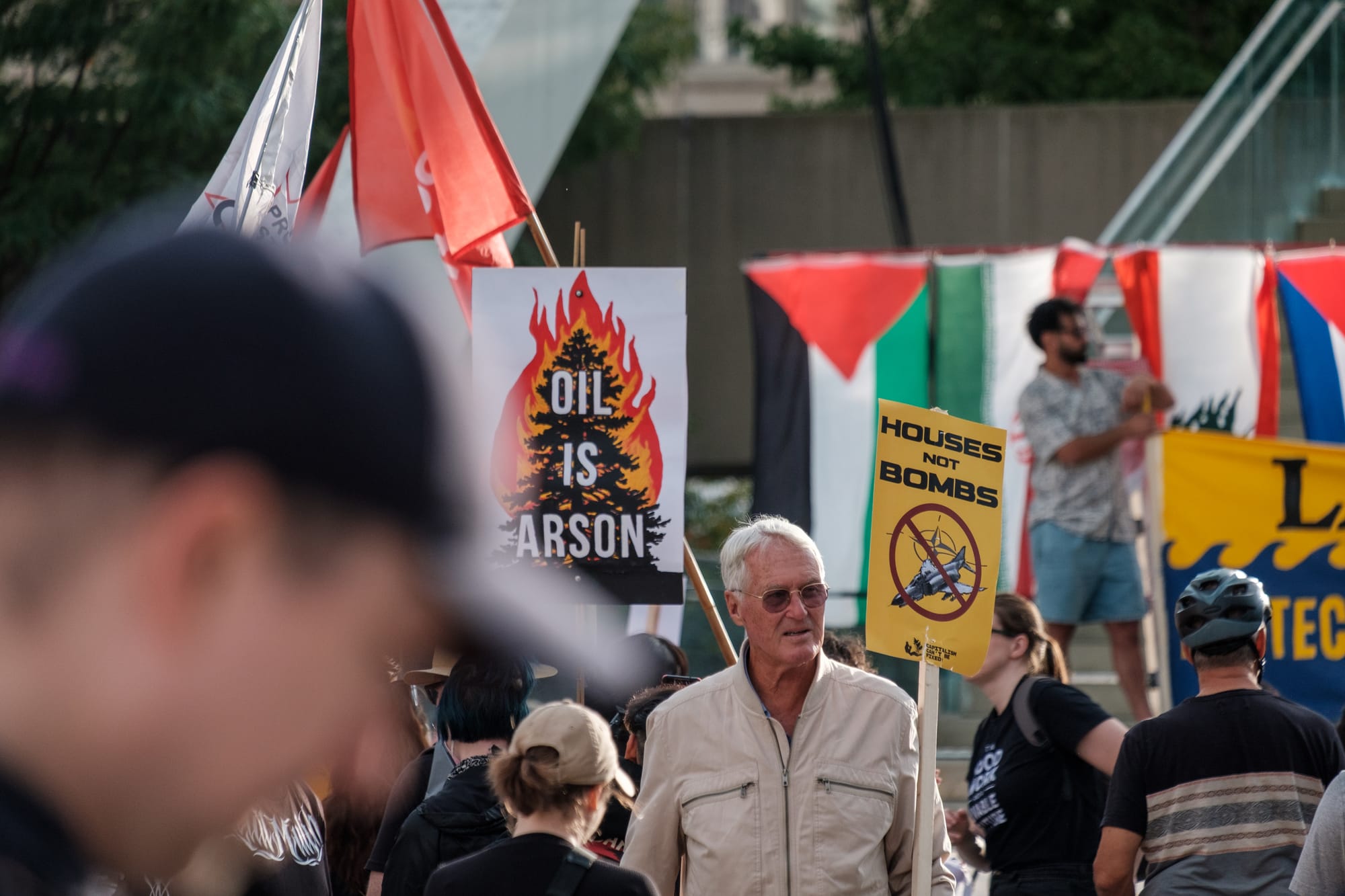

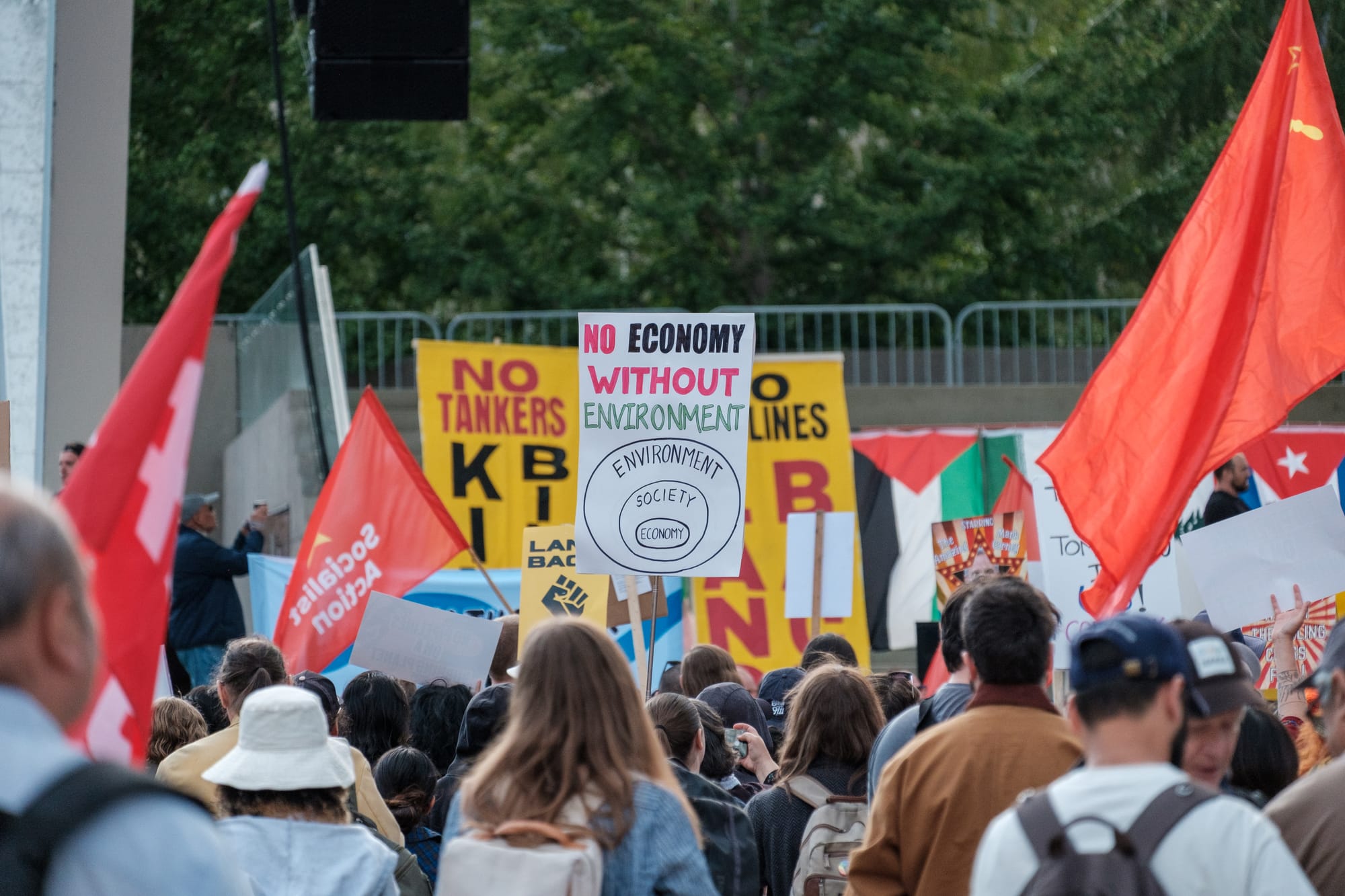
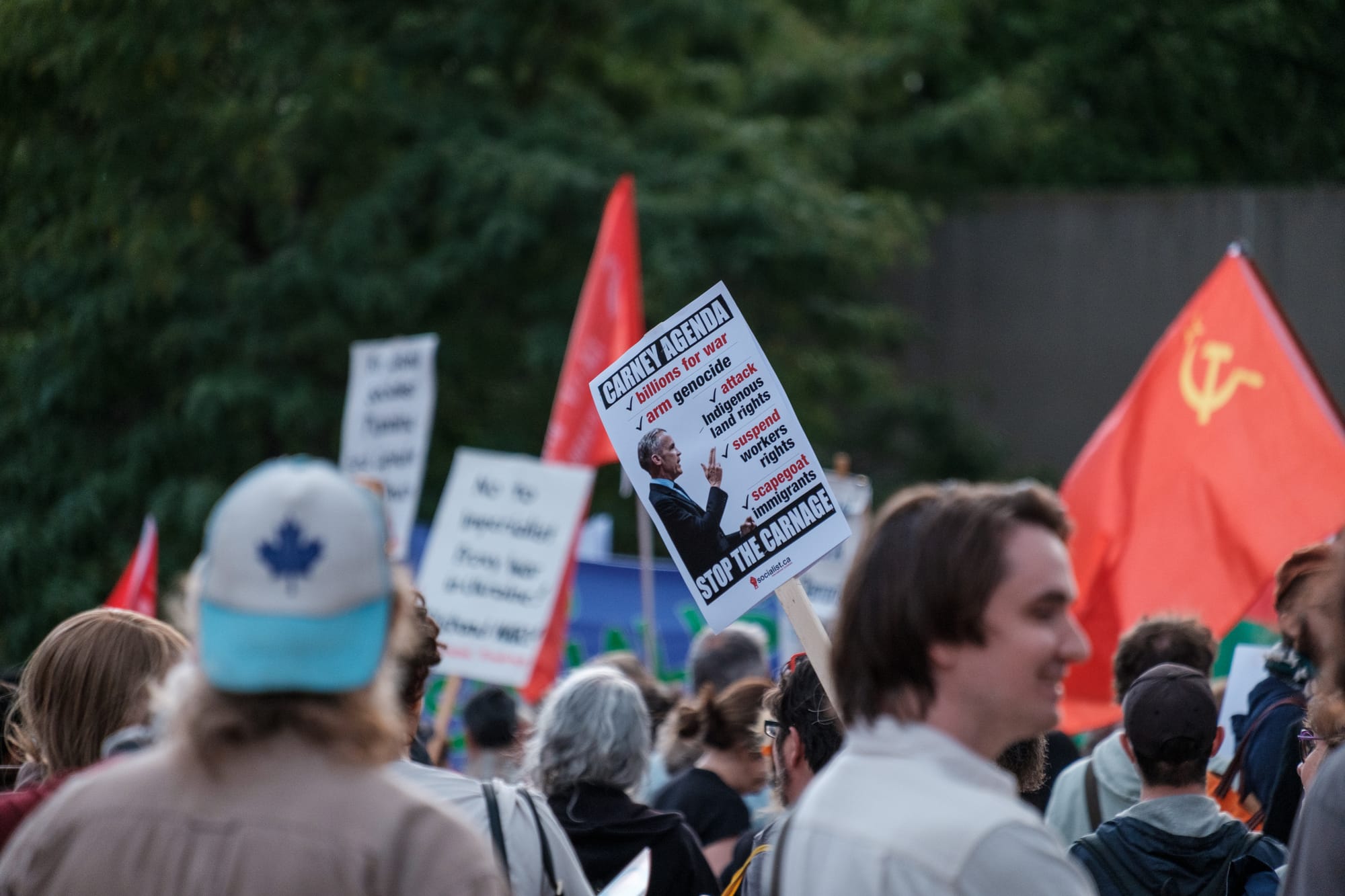
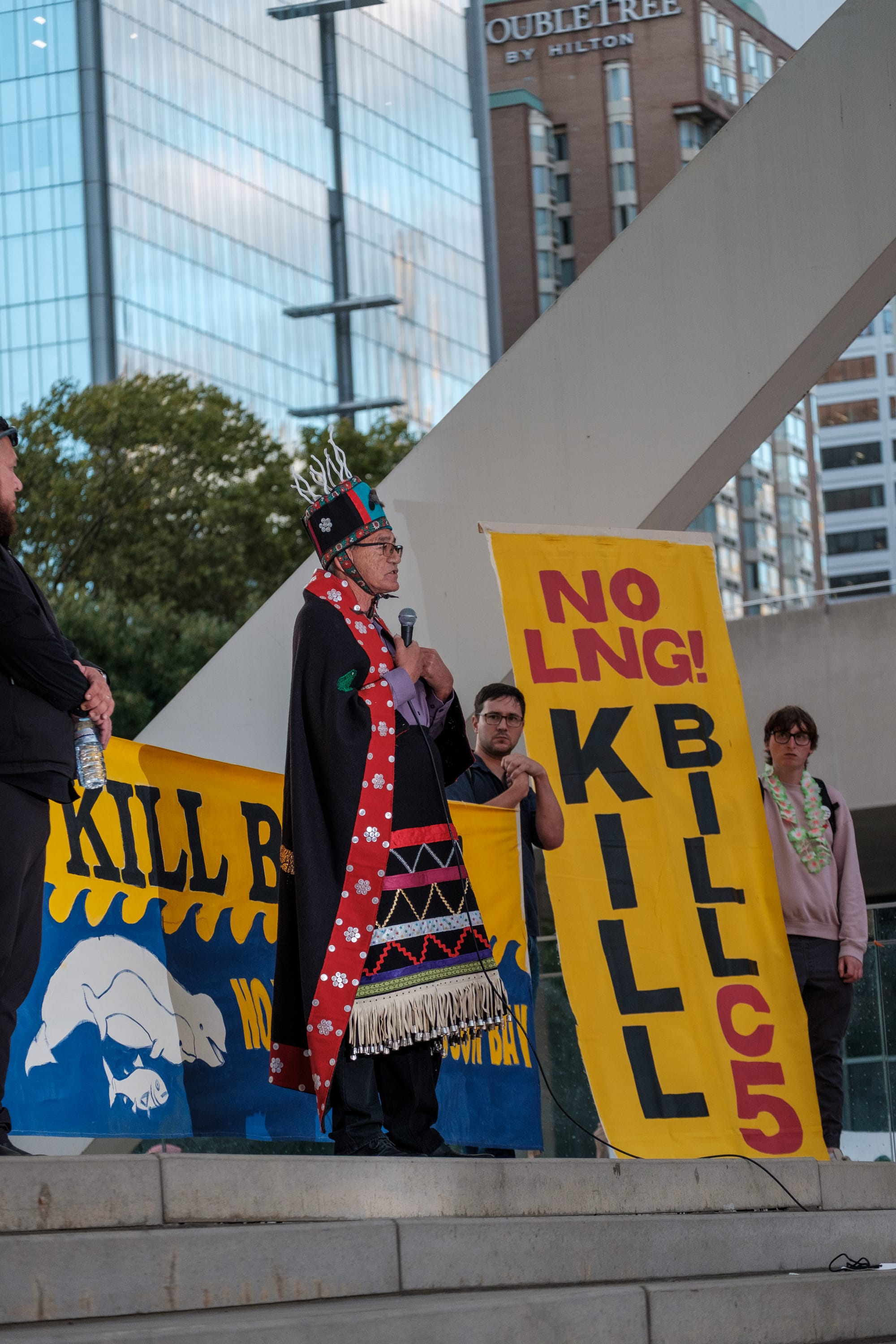

The goal of this protest was to crash the CEO summit.
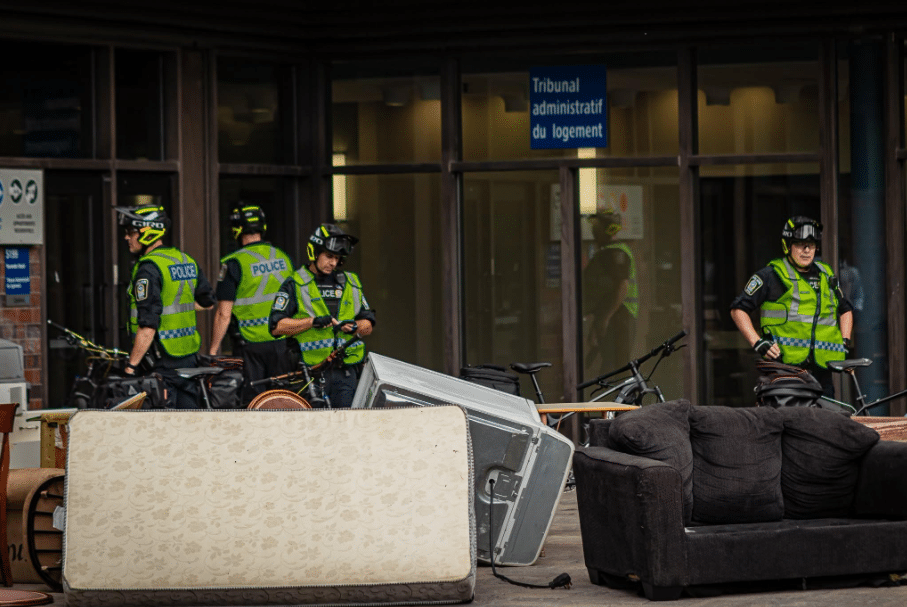
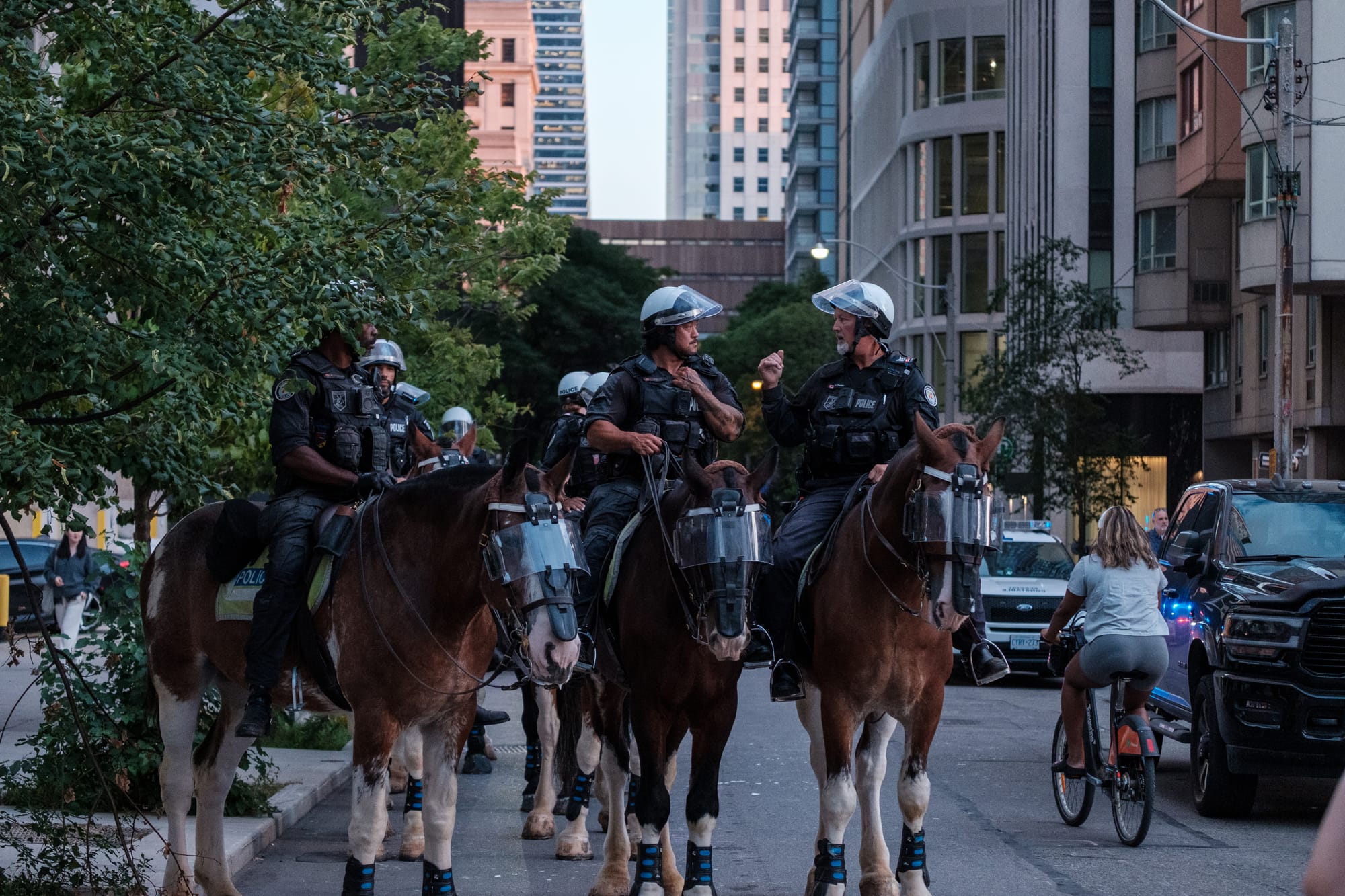
The protesters started marching, Chief Na Moks leading the crowd forward. Toronto police followed the crowd, and some police who were present had patrol carbines, and there were drones, mounted police, and more. Along with the Toronto Police, there were officers from Peel, Durham, York, and the Ontario Provincial Police.
The protesters arrived at the Art Gallery of Ontario, where the OPP had blocked access with a barricade. They refused entry to everyone, including students from OCAD University and gig workers from online delivery services who were not part of the protest.
The police were everywhere. The protesters split into multiple groups, trying to surround the AGO from all sides. In the end, their goal of crashing the event failed. 2 arrests were made according to information acquired by Greg Noakes for the On the Trail, “one for mischief and obstruction, the other for assaulting the police.”
Apparently, the police escorted many of the summit’s attendees out, although we could not confirm this. The protest dispersed around 21:30 or 22:00.
What happened behind those closed doors is simultaneously completely known to all of us, and a complete mystery. We understand that there was a fire sale of Canada’s public property for private investments in infrastructure projects, but we also don’t know the exact details of what happened.
Since last week, copies of the document with every project have been circulating around the media. The document reads, “This investment pitchbook is intended for internal use only and should not be copied, shared, reproduced, distributed, quoted, or otherwise disclosed, in whole or in part.”
As far as I have found, no major media company has released the list for public consumption. So On the Trail compiled the list into a readable format and is making it free for everyone.
NOTE: THE EMBED MIGHT NOT WORK CORRECTLY IN EMAIL. IF SO, PLEASE USE BROWSER.
Isaac Peltz Analysis
Other media companies have done their own analysis, but they’re conservatives and only care about the economy.
This list is dominated by energy projects and resource exploits. This shouldn’t surprise anyone. There is also a section dedicated to digital tech, advanced manufacturing and transportation.
The top line for me is how destructive these projects will be. We’re talking about unbelievable amounts of CO2 pumped into the atmosphere. A report came out on September 11th that Canada is now more than 20 years behind our climate commitments, leaving the 2050 goal for net zero emissions a complete pipe dream that will likely never happen without a massive shift in policy direction.
During Trudeau’s rule, Canada was approaching its goals while continuing to grow the economy. “Previous analysis we conducted with Navius Research in 2023 showed that the full suite of policies in the federal 2030 Emissions Reduction Plan could have put Canada within reach of its near-term targets, if governments had followed through on everything they promised,” the report reads. In short, Trudeau’s policies would have worked had they continued following through.
Carney’s investment summit will do two things at once: It will raise the emissions being produced in Canada, and will significantly raise costs to the federal and provincial treasuries, as rising emissions and climate disasters will cause more property damage to the country. This will create a cycle where governments will have to respond to these crises with huge sums. People will be displaced, entire villages will be wiped off the face of the planet, and smoke will cause diseases such as cancer, which will further cost the state money. Although not imminent, it is possible that, based on our current direction, the state says it isn’t able to support people with health care anymore because of the rising cost of health care inflicted upon Canadian citizens due to the government’s own mismanagement.
Well-designed climate policies would actually save the country money. The sales being agreed to at the summit leave us with many questions. Will we see environmental reviews? Can the money stay in the country during these reviews? Will these processes be bypassed? And will any of this money lead to Canadian prosperity, or simply further enrichment of the ultra-wealthy, and a loss of public property?
The approach that the Carney Liberals are taking is a classical liberal approach to economic policy. It focuses on decentralization from the state, and fits firmly within a centre/centre right economic policy, as we’ve seen under Chrétien, Mulroney, and Harper before them. The approach being taken by Carney is the exact playbook outlined by Ezra Klein’s and Derek Thompson’s book, Abundance. We took the time to read through the book, and to give you an executive summary, it essentially says this:
Stop regulating so much, stop suing the government so much, remove administrative bureaucracy, and let private industry build shit to bring abundance to the country.
The book argues for private industry to build more, and for the government to operate as a coordinative machine. It’s an interesting book, and it’s clearly changed Carney’s life. When comparing his book, Values, with the book Abundance, it’s clear that Abundance changed his outlook before he took power. Abundance has been exceptionally influential among the centrist “progressive” parties in the Anglosphere, including the Democrats in the USA and Labour in the UK.
The Goose Media looked into this. I recommend their video. The investment summit makes the ideas presented in Abundance a practicable reality.
The real question is whether the investment summit will work. Money might be pledged, but it will be years before we see the results of this summit.