


*Updated because I said Jacques Parizeau was the founder of Quebecor, when I mean Jean Karl Péladeau. Big dumb mistake.
“I think that the values and principles of the majority of Quebecers – they are social democrats, they want to share the wealth and take care of their neighbours and their communities,” Alexandre Boulerice said to Mike Le Couteur. Boulerice has recently resigned his seat and left the New Democratic Party at five seats in the house of commons.
This belief has circulated the country for decades. Quebec has long been considered the most left leaning of the Canadian provinces, having seen a shift in 1960 under Jean Lesage’s Liberal party– the beginning of the Quiet Revolution. The social systems and policy that defined the province reached its apex under the Parti Quebecois.
For 35 years, until 1995, the province moved left, building out the most robust social welfare system in North America, creating a unique political system known as “the Quebec model.” It wasn’t as social democratic as Scandinavian countries, but it was far more so than Canada, the United States, or many European states. It had found a balance between the free market of the new world, and the socialist infused democracies of many European nations.
Although the PQ were the fathers of the Quebec model, after 1995 the party started undergoing a shift to the right. It was gradual, almost imperceptible, but when it started there was no turning back.
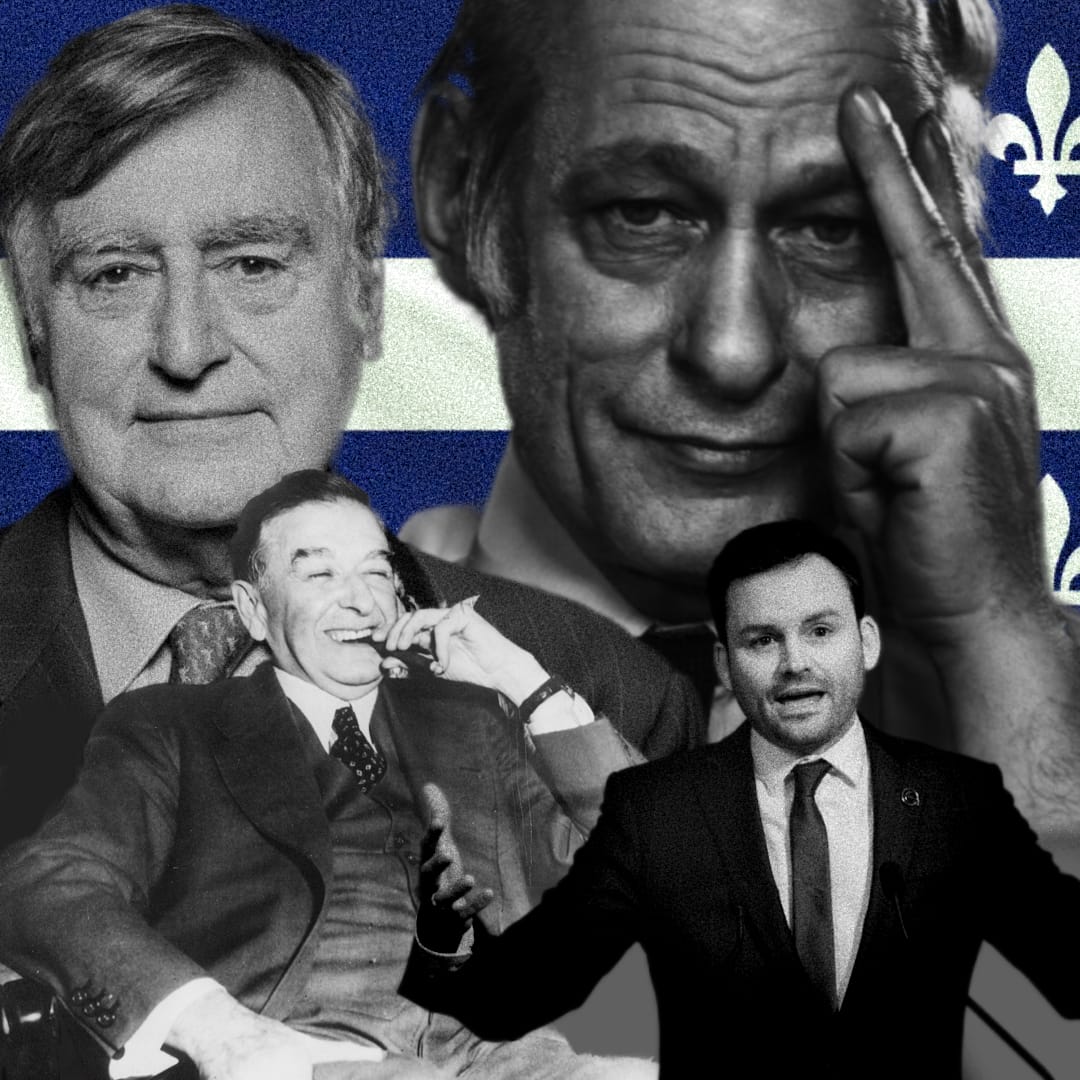
Today, the PQ looks closer to a party aligned with Maurice Duplessis than it does with René Levesque.
The downfall of the PQ from a party of nation building to become a party of grievance, racism, and anger is the story of Quebec transforming after the 1995 referendum. Quebec is not remotely the same place that it was before the 2000s. Quebec has entered a new era.
The Néo Noirceur.